
soft tissue mobilization techniques pdf
Soft tissue mobilization addresses myofascial restrictions, utilizing varied techniques; accessing comprehensive soft tissue mobilization techniques pdf resources is crucial for practitioners.
What is Soft Tissue Mobilization?
Soft tissue mobilization (STM) is a skilled, hands-on therapy focused on restoring optimal function to muscles, tendons, ligaments, and fascia. It involves applying manual techniques to address restrictions and imbalances within these tissues, aiming to reduce pain, improve range of motion, and enhance overall movement patterns. Understanding the nuances of various soft tissue mobilization techniques is paramount for effective treatment.
Specifically, IASTM utilizes specialized tools to manipulate the skin and myofascia, while manual techniques rely on the therapist’s hands; Resources like soft tissue mobilization techniques pdf guides detail direct compressive strokes and their application. These interventions aren’t isolated; they often integrate with stretching, exercise, and other modalities. A clear understanding of these techniques, often found in detailed instructional materials, is vital for rehabilitation professionals.
The Importance of Soft Tissue Health
Maintaining optimal soft tissue health is fundamental to overall physical well-being and functional movement. Restrictions within muscles, fascia, and tendons can contribute to pain, limited range of motion, and impaired performance. Addressing these issues proactively through techniques detailed in soft tissue mobilization techniques pdf resources is crucial.
Healthy soft tissues support proper biomechanics, reducing the risk of injury and enhancing athletic capabilities. Neglecting soft tissue health can lead to chronic pain patterns and compensatory movement strategies. Skilled intervention, like IASTM, manipulates tissues to restore elasticity and reduce adhesions. Accessing comprehensive guides outlining soft tissue mobilization techniques empowers practitioners to deliver effective, targeted care, improving patient outcomes and promoting long-term tissue health.

Types of Soft Tissue Mobilization Techniques
Soft tissue mobilization techniques pdf details manual therapy, IASTM, foam rolling, and percussive massage – each offering unique approaches to address tissue dysfunction.
Manual Soft Tissue Mobilization
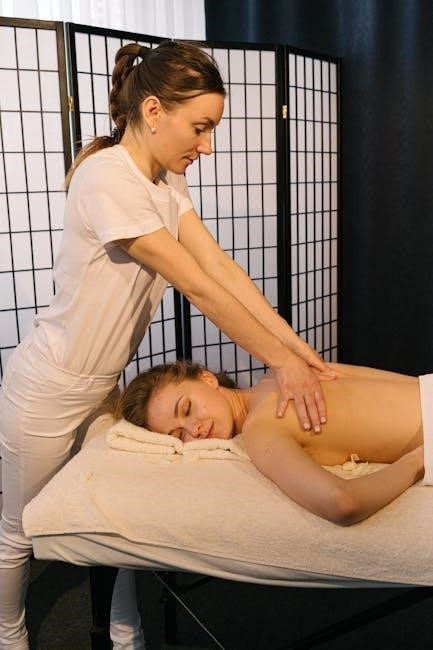
Manual soft tissue mobilization represents the foundational approach, relying on the therapist’s hands to apply targeted pressure and movement. Exploring soft tissue mobilization techniques pdf resources reveals a spectrum of hand-applied methods, including effleurage, petrissage, and friction. These techniques aim to release myofascial restrictions, reduce muscle tension, and improve tissue extensibility.
A key aspect involves assessing tissue texture, tone, and mobility to guide treatment. Therapists utilize their hands to detect areas of restriction and apply appropriate pressure to restore optimal function. Detailed soft tissue mobilization techniques pdf guides often illustrate specific hand positions and movement patterns for various muscle groups and fascial lines. This method enhances circulation, reduces pain, and promotes overall tissue health, forming a cornerstone of many rehabilitation programs.

Massage Therapy Techniques
Within manual soft tissue mobilization, diverse massage therapy techniques offer targeted benefits. Soft tissue mobilization techniques pdf materials detail Swedish massage for relaxation and circulation, deep tissue massage for chronic tension, and myofascial release for fascial restrictions. Trigger point therapy addresses hyperirritable spots within muscles, alleviating referred pain patterns.
These techniques involve varying pressure, speed, and direction, tailored to the individual’s needs. Comprehensive soft tissue mobilization techniques pdf resources emphasize proper body mechanics for the therapist to prevent injury and maximize effectiveness. Understanding the anatomical basis of each technique is crucial for safe and targeted application. Ultimately, massage therapy aims to restore muscle balance, reduce pain, and improve range of motion, contributing significantly to overall well-being.
Instrument-Assisted Soft Tissue Mobilization (IASTM)
Instrument-Assisted Soft Tissue Mobilization (IASTM) employs specialized tools to detect and treat fascial restrictions. Detailed soft tissue mobilization techniques pdf guides explain that IASTM utilizes various direct compressive strokes to manipulate skin, myofascia, muscles, and tendons. It’s a skilled intervention, differing from broader multimodal approaches like Graston and ASTYM.
Professionals should clearly define IASTM as a tool technique – specifying stroke type, duration, and tool selection – and then identify a specific paradigm if combined with other interventions. Accessing soft tissue mobilization techniques pdf resources clarifies proper application, ensuring effective and safe treatment. IASTM aims to break down adhesions, reduce pain, and restore optimal tissue function, enhancing rehabilitation outcomes.
Graston Technique
The Graston Technique is a specific form of IASTM, utilizing stainless steel instruments to identify and treat fascial restrictions. Comprehensive soft tissue mobilization techniques pdf materials detail its six distinct instrument shapes, each designed for specific anatomical areas and tissue depths. Practitioners learn to detect changes in tissue texture, indicating fibrosis or restrictions.
Treatment involves applying the instruments along muscle fibers and across the grain of the tissue, breaking down scar tissue and restoring normal movement. Accessing detailed soft tissue mobilization techniques pdf guides is crucial for mastering the technique’s specific protocols. The Graston Technique aims to reduce pain, improve range of motion, and accelerate healing, often used in sports injury rehabilitation and chronic pain management.
ASTYM (Accelerated Rehabilitation of Muscle Systems)
ASTYM, another IASTM approach, employs a different set of instruments and a unique treatment philosophy compared to the Graston Technique. Detailed soft tissue mobilization techniques pdf resources highlight ASTYM’s focus on addressing regional myofascial restrictions that contribute to movement impairments. The system utilizes instruments with varied contours to detect and treat fibrotic tissue and fascial adhesions.
ASTYM treatment protocols, thoroughly outlined in specialized soft tissue mobilization techniques pdf manuals, emphasize a systematic assessment and treatment approach. It aims to restore optimal muscle function and reduce pain by releasing restrictions throughout the kinetic chain. Like Graston, ASTYM requires specialized training and certification for effective application, focusing on restoring normal tissue mechanics and movement patterns.
Foam Rolling (Self-Myofascial Release)
Foam rolling, a widely accessible self-myofascial release (SMR) technique, utilizes cylindrical foam tools to apply pressure to muscles and fascia. Numerous soft tissue mobilization techniques pdf guides detail proper foam rolling protocols for various muscle groups, emphasizing slow, controlled movements over tender areas. This technique aims to reduce muscle tension, improve flexibility, and enhance recovery.
While simpler than IASTM or manual therapy, effective foam rolling requires understanding correct form and pressure application, as detailed in comprehensive soft tissue mobilization techniques pdf resources. It’s often used as a pre- or post-exercise modality, and research suggests benefits for reducing delayed onset muscle soreness (DOMS). Accessibility and cost-effectiveness make it a popular choice for athletes and individuals seeking self-care options.
Percussive Massage
Percussive massage, delivered via handheld devices, employs rapid, repetitive strokes to target deep muscle tissues. Many soft tissue mobilization techniques pdf documents now include sections on percussive therapy, outlining appropriate application techniques and contraindications. This method aims to increase blood flow, reduce muscle tension, and improve range of motion, often used for pre- and post-exercise recovery.
Studies, as referenced in research exploring DOMS reduction, suggest percussive massage can be effective when compared to rest. Detailed soft tissue mobilization techniques pdf guides emphasize the importance of varying intensity and speed based on individual needs and tolerance. While convenient, proper technique is crucial to avoid discomfort or injury, making educational resources invaluable for safe and effective use.
Physiological Effects of Soft Tissue Mobilization
Soft tissue mobilization impacts circulation, reduces soreness, and alters myofascial tissue; detailed soft tissue mobilization techniques pdf guides explain these physiological responses.
Impact on Myofascial Tissue
Myofascial tissue, a complex web enveloping muscles and organs, often develops restrictions impacting movement and causing discomfort. Soft tissue mobilization techniques directly address these adhesions, restoring optimal tissue length and reducing fascial tension. Specialized tools, as detailed in soft tissue mobilization techniques pdf guides, facilitate the breakdown of scar tissue and cross-links within the fascia.
These techniques aim to rehydrate the fascia, improving its pliability and allowing for greater freedom of movement. By releasing myofascial restrictions, practitioners can alleviate pain, enhance flexibility, and improve overall biomechanics. Understanding the intricate structure of fascia, and the specific applications of various mobilization techniques – thoroughly explained within comprehensive soft tissue mobilization techniques pdf resources – is paramount for effective treatment. The goal is not simply to stretch the fascia, but to restore its inherent gliding and sliding properties.
Changes in Circulation and Blood Flow
Soft tissue mobilization techniques profoundly influence local circulation, enhancing blood flow to treated areas. Manual pressure and instrument-assisted methods create hyperemia – an increase in blood volume – delivering vital oxygen and nutrients to tissues. This improved perfusion aids in tissue repair and reduces inflammation, as detailed in many soft tissue mobilization techniques pdf resources.
Increased blood flow also facilitates the removal of metabolic waste products, accelerating recovery and diminishing pain. Techniques like massage and IASTM mechanically assist venous and lymphatic drainage, further optimizing circulatory function. Detailed protocols within soft tissue mobilization techniques pdf guides emphasize the importance of directional strokes aligned with venous return. Understanding these physiological responses is crucial for maximizing therapeutic benefits and tailoring treatment plans to individual patient needs, promoting healthier tissue and function.
Reduction of Muscle Soreness (DOMS)
Soft tissue mobilization techniques effectively mitigate Delayed Onset Muscle Soreness (DOMS), a common consequence of strenuous exercise. Research, often detailed in soft tissue mobilization techniques pdf materials, demonstrates that interventions like foam rolling and percussive massage reduce pain and fatigue associated with DOMS. These techniques address microtrauma within muscle fibers, promoting tissue repair and reducing inflammatory responses.
By increasing blood flow and lymphatic drainage, mobilization helps clear metabolic waste products contributing to soreness. Specific protocols outlined in soft tissue mobilization techniques pdf guides suggest optimal timing and intensity for DOMS management. Furthermore, these techniques can restore muscle length and reduce myofascial restrictions, improving range of motion and function. Implementing these strategies post-exercise can significantly enhance recovery and minimize discomfort, allowing for quicker return to activity.
Applications of Soft Tissue Mobilization
Soft tissue mobilization finds broad application in rehabilitation, pain management, and postural correction; detailed soft tissue mobilization techniques pdf guides enhance clinical efficacy.
Sports Injury Rehabilitation
Soft tissue mobilization plays a pivotal role in sports injury rehabilitation, addressing muscle strains, ligament sprains, and tendinopathies effectively. Techniques like IASTM, guided by detailed soft tissue mobilization techniques pdf resources, break down scar tissue and restore optimal tissue mobility post-injury.
Foam rolling and percussive massage, also detailed in these guides, enhance recovery by reducing muscle soreness and improving circulation. Rehabilitation protocols often integrate these methods to accelerate healing and return athletes to play. Understanding specific applications, as outlined in comprehensive soft tissue mobilization techniques pdf materials, allows practitioners to tailor treatment plans to individual athlete needs and injury types. Proper technique, emphasized within these resources, minimizes risk and maximizes therapeutic benefits, ensuring a safe and efficient recovery process for sports-related musculoskeletal issues.
Management of Chronic Pain
Soft tissue mobilization offers a non-invasive approach to managing chronic pain conditions like fibromyalgia and myofascial pain syndrome. Utilizing techniques detailed in soft tissue mobilization techniques pdf guides, practitioners can address underlying fascial restrictions contributing to pain and limited movement. IASTM, specifically, proves valuable in breaking down adhesions and restoring tissue extensibility, offering sustained relief.
Manual therapy and self-myofascial release, as described within these resources, empower patients to actively participate in their pain management. Understanding proper application, guided by soft tissue mobilization techniques pdf materials, is crucial for effectiveness and safety. These techniques improve circulation, reduce muscle tension, and modulate pain signals, providing a holistic approach to chronic pain management; Consistent application, informed by detailed guides, can significantly improve quality of life for individuals experiencing persistent pain.
Postural Correction
Soft tissue mobilization plays a vital role in postural correction by addressing muscle imbalances and fascial restrictions that contribute to poor alignment. Detailed soft tissue mobilization techniques pdf resources illustrate how targeted interventions can release tight muscles – often those shortened due to habitual poor posture – and lengthen those that are overstretched and weak.
Techniques like IASTM and manual massage, as outlined in these guides, help restore optimal muscle length-tension relationships. Addressing restrictions in the myofascia allows for improved joint mechanics and movement patterns. Utilizing soft tissue mobilization techniques pdf protocols, practitioners can effectively address postural deviations like forward head posture or rounded shoulders. This holistic approach, combining tissue work with corrective exercises, promotes long-term postural improvements and reduces associated pain and dysfunction.

Evidence-Based Practice & Research
Research on soft tissue mobilization techniques pdf demonstrates efficacy for DOMS and circulation; clinical guidelines for IASTM are continually evolving.
Studies on Foam Rolling and Percussive Massage
Recent investigations, often detailed within soft tissue mobilization techniques pdf guides, explore the impact of foam rolling and percussive massage on delayed onset muscle soreness (DOMS). A single-blinded randomized controlled trial examined recreational athletes, comparing these techniques to rest, evaluating pain, fatigue via visual analog scales, and skin surface temperature changes using thermal imaging.
Findings suggest both modalities can influence physiological markers related to muscle recovery. These studies frequently assess the effectiveness of specific application parameters – duration, frequency, and intensity – crucial information found in detailed technique manuals. Further research focuses on the underlying mechanisms, such as alterations in blood flow and myofascial release, providing a stronger evidence base for incorporating these techniques into rehabilitation programs. Accessing comprehensive soft tissue mobilization techniques pdf resources is vital for understanding study methodologies and translating research into clinical practice.
Clinical Practice Guidelines for IASTM
Instrument-assisted soft tissue mobilization (IASTM) requires a clear understanding of its scope, often detailed in soft tissue mobilization techniques pdf resources. Guidelines emphasize defining IASTM as a tool technique – focusing on stroke type, treatment time, cadence, and tool selection – distinct from broader paradigms like Graston or ASTYM.
Sports medicine professionals should clearly delineate when IASTM is used solely as a tool versus when integrated with other interventions (stretching, exercise, modalities) as dictated by specific training programs. These guidelines, often provided by instructing bodies, promote standardized application and prevent confusion. Comprehensive soft tissue mobilization techniques pdf materials highlight the importance of skilled intervention, manipulating skin, myofascia, muscles, and tendons with direct compressive strokes, ensuring safe and effective patient care.

Tools and Resources
Accessing detailed soft tissue mobilization techniques pdf guides and selecting appropriate IASTM tools are vital for effective treatment and continued professional development.
IASTM Tool Selection
Choosing the correct Instrument-Assisted Soft Tissue Mobilization (IASTM) tools requires careful consideration, as numerous options exist with varying shapes, sizes, and materials. Practitioners should prioritize tools crafted from stainless steel, ensuring durability and ease of sterilization – crucial for maintaining hygienic practice standards. When reviewing soft tissue mobilization techniques pdf resources, pay attention to recommendations regarding tool profiles; some are better suited for broad muscle areas, while others excel at targeting specific tendons or ligaments.
Furthermore, understanding the specific techniques outlined in your chosen soft tissue mobilization techniques pdf will guide your selection. Different schools of thought, like Graston or ASTYM, may advocate for particular tool designs. Consider the patient’s body type and the location of the tissue restriction when making your decision. A diverse toolkit allows for adaptability, but starting with a foundational set of versatile tools is often recommended for beginners.
Accessing Educational Materials (PDFs)
Locating reliable soft tissue mobilization techniques pdf resources is paramount for safe and effective practice. Numerous organizations offer comprehensive training materials, often available for purchase or as part of certification programs. Reputable sources include those affiliated with IASTM technique developers like Graston Technique and ASTYM (Accelerated Rehabilitation of Muscle Systems), providing detailed protocols and clinical guidelines.
Professional associations, such as those for physical therapists and athletic trainers, frequently curate lists of recommended resources, including downloadable soft tissue mobilization techniques pdf guides. Online databases and academic search engines can also yield valuable research articles and case studies. Always verify the credibility of the source and ensure the material is current, reflecting evidence-based practice. Prioritize materials that emphasize proper technique, contraindications, and patient assessment.