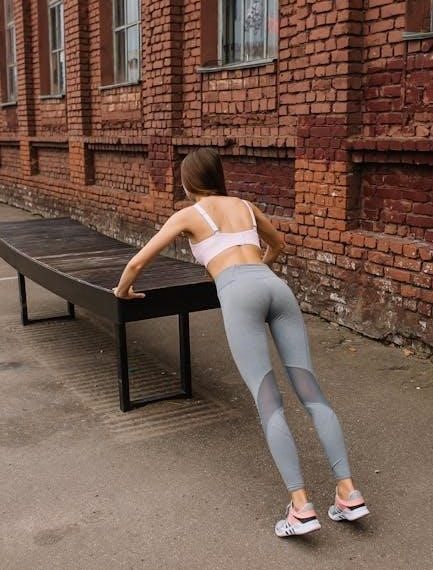
glute building workout plan pdf
Embark on a transformative journey with an 8-week glute building plan, readily available as a free PDF, designed to sculpt and strengthen your glutes effectively!
Numerous programs, spanning 4 to 12 weeks, offer structured workouts to maximize glute growth, catering to all fitness levels and goals.
Why Focus on Glute Development?
Prioritizing glute development offers benefits extending far beyond aesthetics. Strong glutes are crucial for functional movement, enhancing athletic performance, and preventing injuries. A well-structured glute building workout plan, often available as a free PDF, targets these muscles for optimal growth.
These exercises improve posture, stabilize the pelvis, and contribute to a powerful stride. Whether you’re aiming for a sculpted physique or improved physical capabilities, dedicating time to glute training is invaluable. Programs ranging from 4 to 12 weeks, like those found online, provide a roadmap to achieve noticeable results and a stronger, more functional body.
Understanding Glute Muscles (Gluteus Maximus, Medius, Minimus)
Effective glute building workout plans, often downloadable as a free PDF, necessitate understanding the three primary gluteal muscles. The Gluteus Maximus is the largest, responsible for hip extension and power. The Gluteus Medius stabilizes the pelvis during movement, preventing imbalances.
Finally, the Gluteus Minimus assists in hip abduction and internal rotation. Targeting all three is vital for comprehensive glute development. Programs, spanning 8 to 12 weeks, incorporate exercises designed to activate and strengthen each muscle group, ensuring balanced growth and optimal functionality, leading to a well-rounded physique.
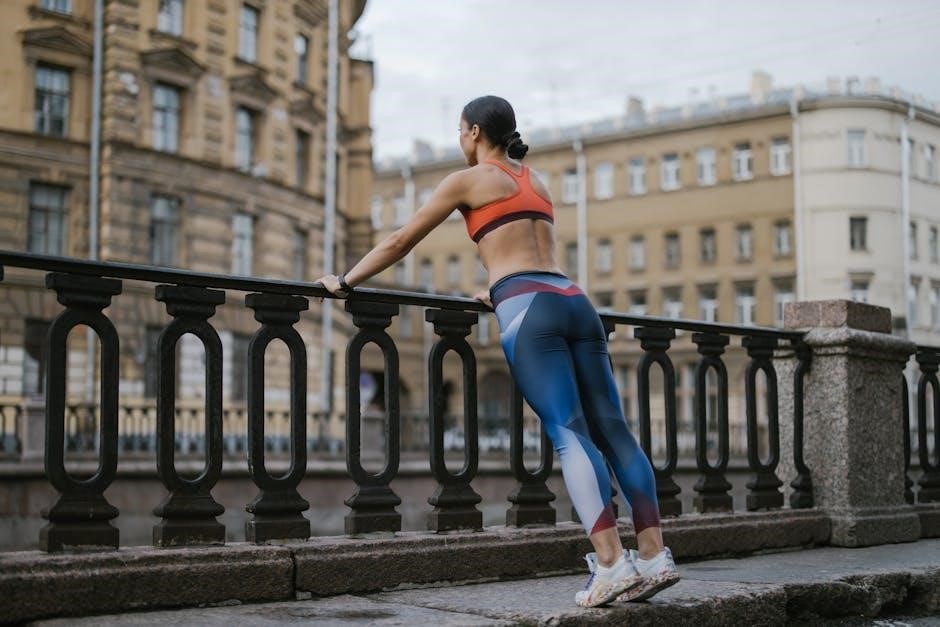
8-Week Glute Building Workout Plan Overview
This plan, often found as a free PDF, structures workouts over eight weeks, progressively increasing intensity to maximize glute growth and achieve noticeable results!
Program Goals & Target Audience
The primary goal of these glute-focused programs, frequently available as downloadable PDFs, is to enhance gluteal muscle hypertrophy – essentially, to build bigger, stronger glutes. This is achieved through progressive overload and targeted exercises.
The target audience is broad, encompassing both men and women seeking to improve their lower body strength, shape, and overall physique. Whether you’re a beginner or have some lifting experience, these plans can be adapted.
Many programs emphasize a focus on aesthetics, aiming to create a more sculpted and defined “booty,” while others prioritize functional strength for athletic performance. The free PDFs often cater to those seeking an accessible and effective solution.
Workout Frequency & Structure
Most 8-week glute building plans, often distributed as free PDF guides, recommend a training frequency of 2-3 glute-focused workouts per week. This allows for adequate muscle recovery and growth.
The structure typically involves a phased approach, starting with foundational activation work and progressing to heavier compound lifts and advanced techniques. Workouts are often split into different focuses, such as hip thrust variations, lunges, and accessory exercises.
Programs frequently incorporate rest periods of 60-90 seconds between sets, and emphasize proper form over lifting maximal weight. The PDF format allows for easy tracking of sets, reps, and progression.
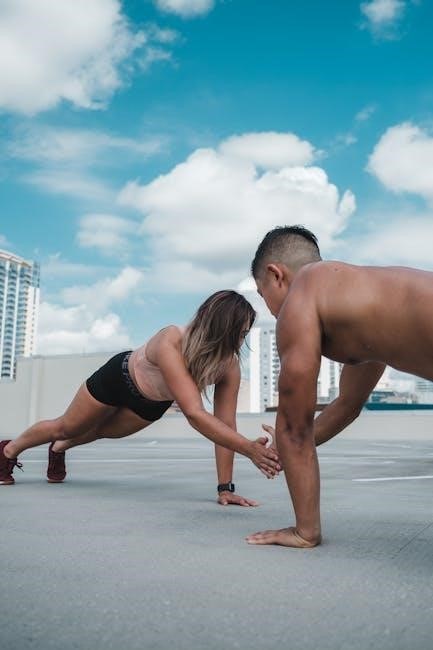
Phase 1: Foundation & Activation (Weeks 1-2)
Begin with bodyweight exercises and light resistance, focusing on glute activation. Key movements include alternating long leg marches and prone frog curls for optimal results!
Warm-up Routine for Glute Activation
Prioritize a dynamic warm-up to prepare your glutes for the workout ahead. Begin with glute bridges (15-20 reps) to gently activate the muscles. Follow this with banded lateral walks (10-15 steps each direction) using a light resistance band, focusing on maintaining tension.
Next, incorporate fire hydrants (10-15 reps per leg) to target the gluteus medius. Then, perform donkey kicks (15-20 reps per leg) ensuring controlled movements. Finally, include alternating long leg marches (10 reps per leg) to further engage the glutes and improve hip mobility. This routine enhances blood flow and prepares the glutes for heavier lifting, minimizing injury risk.
Key Exercises: Bodyweight & Light Resistance
Phase 1 focuses on building a solid foundation with bodyweight and light resistance exercises. Begin with alternating long leg marches (3 sets of 10 reps per leg) to activate glutes and core. Incorporate prone frog curls (3 sets of 10-12 reps) to target the gluteus maximus.
Add glute bridges (3 sets of 15-20 reps) and banded lateral walks (3 sets of 15 steps per direction) using a light resistance band. These exercises emphasize proper form and muscle activation before progressing to heavier loads. Focus on controlled movements and squeezing the glutes throughout each repetition for optimal results.
Alternating Long Leg March
The alternating long leg march is a foundational exercise for glute activation and core stability. Begin by standing with feet hip-width apart, maintaining a neutral spine. Slowly lift one knee towards your chest, driving with your heel and squeezing your glutes.
Focus on keeping your core engaged and preventing any excessive rocking or arching of your back. Alternate legs in a controlled manner, performing 3 sets of 10 repetitions per leg. This exercise effectively targets the gluteus medius and maximus, improving hip flexor strength and overall glute engagement.
Prone Frog Curl
The prone frog curl is an excellent exercise for isolating and activating the gluteus maximus and hamstrings. Lie face down with knees bent at a 90-degree angle and feet flexed. Bring your heels towards your glutes, squeezing at the top of the movement.
Maintain a neutral spine and focus on contracting your glutes throughout the exercise. Slowly lower your heels back to the starting position, controlling the movement. Perform 3 sets of 10-12 repetitions. This exercise enhances glute strength and improves hip extension, contributing to a more sculpted and toned posterior.
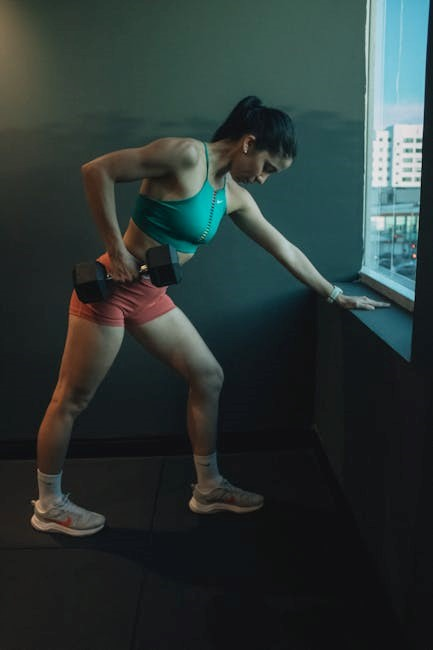
Phase 2: Strength & Hypertrophy (Weeks 3-6)
This phase focuses on building glute strength and size through progressive overload using compound exercises, maximizing muscle hypertrophy for noticeable results!
Progressive Overload Principles
Progressive overload is the cornerstone of glute growth, demanding consistent challenges to stimulate muscle adaptation. This involves gradually increasing the demands placed upon your glute muscles over time. Key strategies include incrementally adding weight to exercises like barbell hip thrusts and hyperextensions, increasing repetitions within sets, or reducing rest times between sets.
Another effective method is enhancing exercise complexity, transitioning from bodyweight exercises to weighted variations. Monitoring your progress and adjusting the overload accordingly is crucial. Listen to your body, ensuring proper form is maintained throughout. Consistent application of these principles will drive continuous glute development and maximize your results throughout weeks 3-6.
Compound Exercises for Glute Growth
Compound exercises are vital for maximizing glute development, engaging multiple muscle groups simultaneously for greater overall strength and hypertrophy. Barbell hip thrusts are a powerhouse movement, directly targeting the gluteus maximus. Hyperextensions effectively isolate and strengthen the glutes and lower back, contributing to a well-rounded physique.
These exercises allow for heavier loads, promoting significant muscle fiber recruitment. Incorporating 3 sets of 8-12 repetitions with 60-90 second rest periods is recommended. Prioritize proper form to prevent injury and ensure optimal muscle activation. Focus on controlled movements and a full range of motion to fully stimulate glute growth during weeks 3-6.
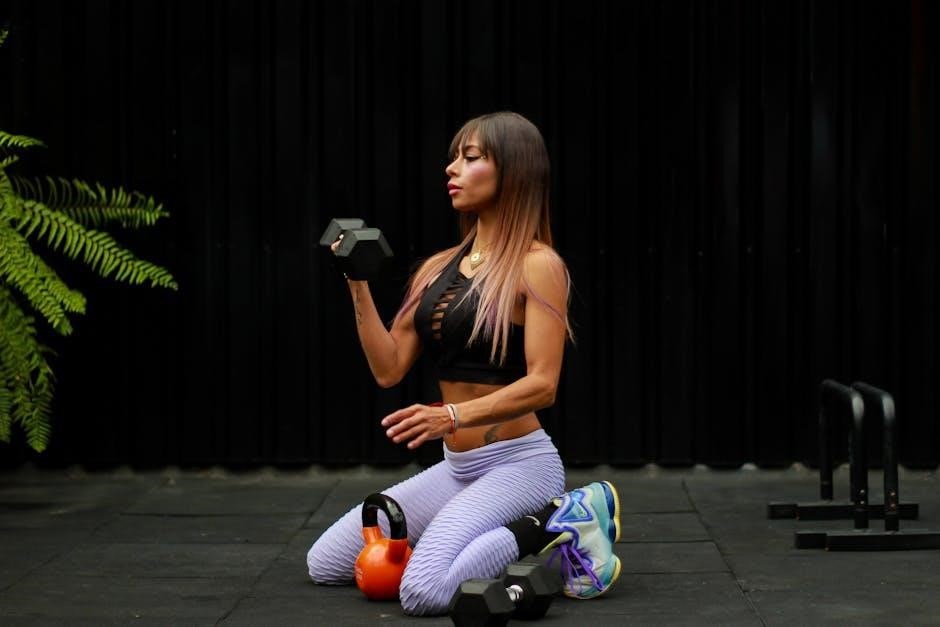
Barbell Hip Thrust
The barbell hip thrust is a premier exercise for isolating and strengthening the gluteus maximus. Position your upper back against a bench, with a barbell across your hips, padded for comfort. Drive through your heels, extending your hips upwards, squeezing your glutes at the top of the movement.
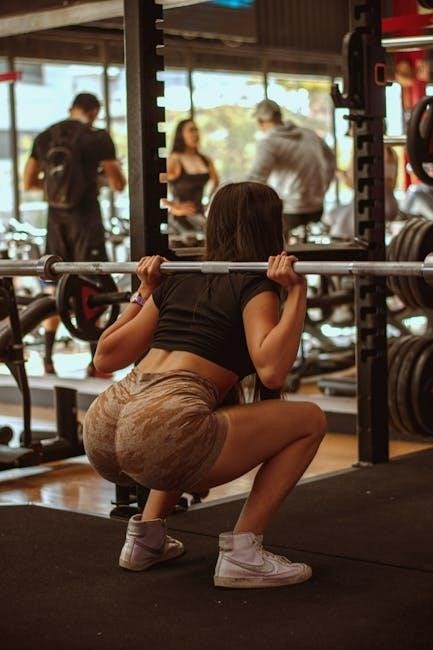
Perform 3 sets of 8-12 repetitions, allowing 60-90 seconds of rest between sets. Maintain a neutral spine throughout the exercise, avoiding excessive arching or rounding of the back. Progressively increase the weight as you get stronger, ensuring proper form is maintained. This exercise is crucial for building a strong and sculpted posterior chain.
Hyperextensions
Hyperextensions are a fantastic exercise for targeting the glutes, hamstrings, and lower back. Utilize a hyperextension bench, securing your feet and positioning your hips just below the pad. Slowly lower your torso, maintaining a straight back, and then powerfully extend back up, squeezing your glutes at the peak contraction.
Aim for 3 sets of 10-15 repetitions, with 60-90 seconds rest between sets. Avoid overextending at the top of the movement to prevent lower back strain. Consider adding weight (plate or dumbbell) for increased challenge as you progress. Hyperextensions contribute significantly to overall posterior chain strength and glute development.
Phase 3: Peak & Refinement (Weeks 7-8)
This final phase utilizes advanced techniques like drop sets and supersets to maximize glute growth and refine your physique for noticeable results!
Advanced Techniques: Drop Sets & Supersets
To truly push past plateaus and maximize glute development during these final weeks, incorporating advanced techniques like drop sets and supersets is crucial. Drop sets involve performing an exercise to failure, then immediately reducing the weight and continuing for more repetitions – maximizing muscle fiber recruitment.
Supersets pair two exercises back-to-back with minimal rest, often targeting opposing muscle groups or the same muscle group from different angles. This increases workout density and metabolic stress, promoting hypertrophy. For example, pairing a barbell hip thrust with glute bridges creates a powerful superset. These techniques demand focus and intensity, delivering a final surge of growth!
Accessory Exercises for Glute Shaping
Refine your glute shape and address any lagging areas with targeted accessory exercises. Curtsy lunges are excellent for hitting the gluteus medius, contributing to a rounder, more lifted appearance. Dumbbell step-ups effectively isolate each glute, building strength and definition.
Focus on controlled movements and a full range of motion to maximize muscle activation. Incorporate exercises like banded lateral walks and cable kickbacks to further sculpt and refine your glutes. These additions complement the compound lifts, creating a well-rounded and aesthetically pleasing physique. Remember proper form is key for optimal results and injury prevention!
Curtsy Lunges
Curtsy lunges are a fantastic accessory exercise targeting the gluteus medius, crucial for hip stability and a well-rounded glute appearance. To perform, stand with feet hip-width apart and step one leg diagonally behind the other, lowering into a lunge.

Keep your torso upright and core engaged throughout the movement, focusing on squeezing the glute of the working leg. Aim for 10-12 repetitions per leg for 2-3 sets. Variations include adding dumbbells for increased resistance or performing them with a resistance band around the thighs for enhanced activation.
Dumbbell Step-Ups
Dumbbell step-ups are a highly effective accessory exercise for building glute strength and definition. Select a stable box or bench and hold a dumbbell in each hand. Step onto the box with one foot, driving through your heel to lift your body up.
Focus on squeezing your glutes at the top of the movement and maintaining a controlled descent. Aim for 10-12 repetitions per leg for 2-3 sets. Adjust the height of the box or the weight of the dumbbells to modify the difficulty. This exercise also improves balance and coordination.
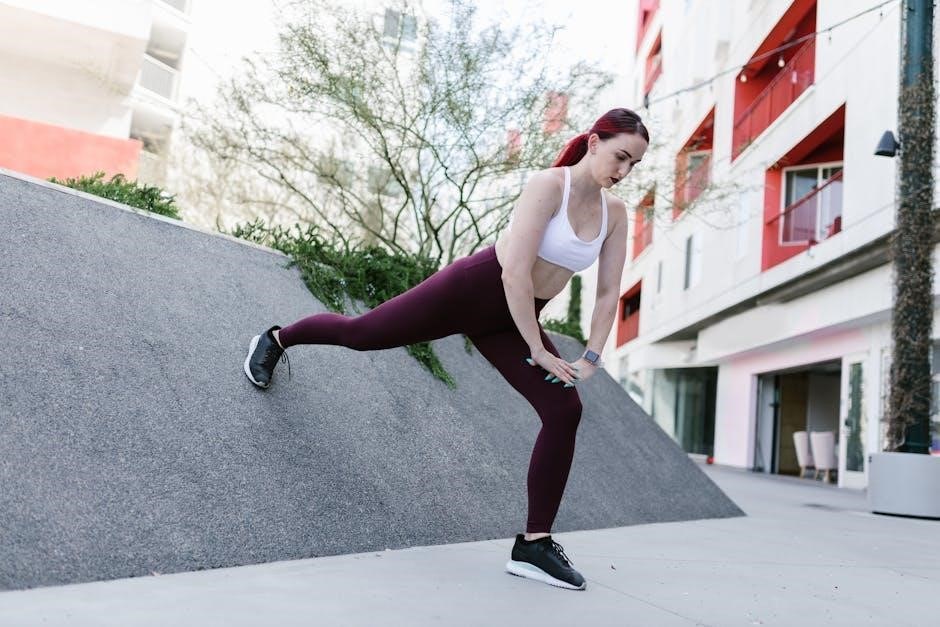
Cool-down & Recovery
Prioritize stretching and foam rolling post-workout to enhance flexibility and reduce muscle soreness. Adequate protein intake is crucial for muscle repair and growth!
Importance of Stretching & Foam Rolling
Post-workout recovery is paramount for optimal glute development, and incorporating stretching and foam rolling is non-negotiable. Stretching improves flexibility, range of motion, and helps prevent injuries by lengthening muscle fibers. Focus on dynamic stretches before workouts to prepare muscles and static stretches afterward to cool down.
Foam rolling, a form of self-myofascial release, targets muscle knots and tension, improving blood flow and reducing soreness. Specifically target glute muscles, hamstrings, and quads. Regular foam rolling can significantly enhance recovery, allowing you to train more frequently and effectively, ultimately accelerating your glute-building progress. Don’t underestimate this crucial step!
Nutrition for Glute Growth (Protein Intake)
Fueling your body correctly is as vital as the workout itself when pursuing glute growth. Protein is the cornerstone of muscle repair and hypertrophy, meaning adequate intake is non-negotiable. Aim for approximately 0.8-1 gram of protein per pound of body weight daily to support muscle protein synthesis.
Prioritize lean protein sources like chicken, fish, turkey, eggs, and legumes. Strategic protein timing – consuming protein around your workouts – can further optimize recovery and growth. Combine sufficient protein with a balanced diet rich in complex carbohydrates and healthy fats to provide the energy needed for intense training and overall muscle development.
Free PDF Download & Resources
Unlock your glute-building potential with readily available resources! Several websites offer comprehensive 8-week to 12-week glute workout plans in convenient PDF format. Robor Fitness and The Fitness Phantom provide downloadable PDFs, offering structured routines for noticeable results;
These free resources typically include detailed exercise instructions, sets, reps, and rest periods. Muscle & Strength also features a 3-day glute workout plan. Supplement your plan with online articles and videos demonstrating proper form and technique. Embrace these tools to maximize your glute gains and achieve your fitness goals!