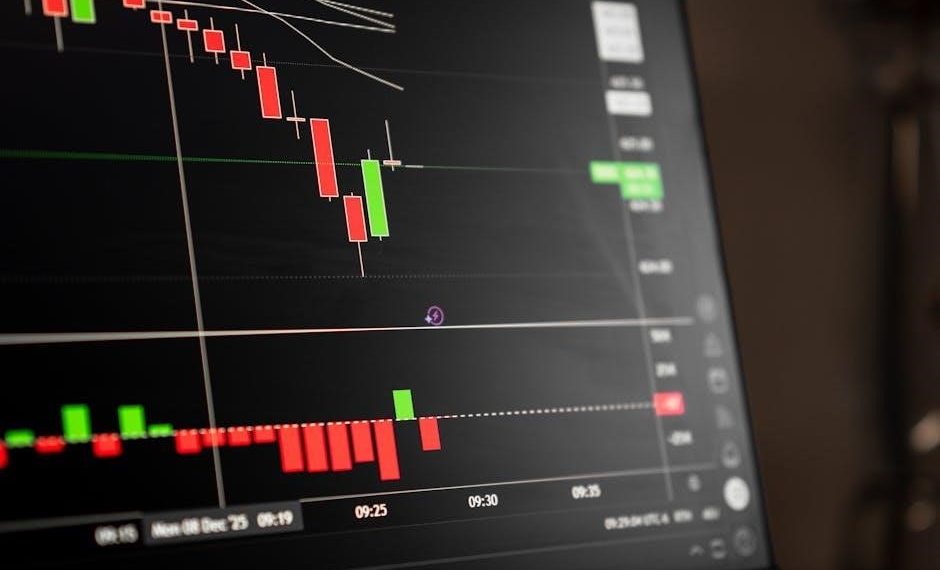
pdf technical analysis using multiple timeframes
Brian Shannon’s influential work, Technical Analysis Using Multiple Timeframes (2008), champions a contextual, layered approach to understanding market dynamics and identifying opportunities․
This method involves analyzing price charts across various timeframes, enhancing trend identification and pinpointing crucial support and resistance levels․
What is Multi-Timeframe Analysis (MTF)?
Multi-Timeframe Analysis (MTF) is a technical analysis technique where traders examine a financial asset’s price action across multiple chart timeframes simultaneously․ Instead of relying on a single timeframe – like a daily chart in isolation – MTF considers the broader context provided by weekly or monthly charts, alongside more granular views like hourly or 30-minute charts․
Essentially, it’s about building a comprehensive understanding of market structure․ Brian Shannon’s work emphasizes this layered approach․ This allows traders to identify the prevailing trend on a higher timeframe and then use lower timeframes to refine entry and exit points․ It’s analyzing bars or candles across different durations to gain a clearer picture․
The goal is to confirm signals and filter out false breakouts, leading to more informed trading decisions․
Why Use Multiple Timeframes?
Employing multiple timeframes enhances trading accuracy by providing a more holistic view of market dynamics․ Relying on a single timeframe can lead to misinterpretations and false signals․ MTF analysis, as advocated by Brian Shannon, helps traders understand the context surrounding price movements․
It allows for confirmation of trends; a trend identified on a daily chart is strengthened if corroborated by a similar trend on a weekly chart․ Furthermore, MTF analysis aids in identifying key support and resistance levels that are significant across multiple time horizons․
This approach helps filter out noise and pinpoint optimal entry and exit points, ultimately improving risk management and profitability․
Common Misconceptions About MTF Analysis
A frequent misunderstanding is that MTF analysis automatically guarantees profitable trades; it’s a tool, not a holy grail․ Some believe it adds unnecessary complexity, but Brian Shannon’s work demonstrates its value in contextualizing market data․ Another misconception is that lower timeframes are solely for entry signals․
In reality, they confirm the broader trend established on higher timeframes․ Traders sometimes incorrectly assume conflicting signals across timeframes invalidate a trade, when they often present nuanced opportunities․
MTF analysis isn’t about finding perfect alignment, but understanding the interplay between different perspectives․

Understanding Timeframes in Technical Analysis
Technical analysis relies on viewing market data as bars or candles, where the timeframe defines the duration of each bar, offering varied perspectives․
Defining Chart Timeframes (Bars and Candles)
Chart timeframes are fundamental to technical analysis, representing the length of time each bar or candle encompasses․ Traders commonly observe market data visualized as these bars or candles, each providing a snapshot of price movement over a specific period․
These timeframes range from minute charts, ideal for scalpers, to daily and weekly charts favored by longer-term investors․ Understanding how these divisions impact analysis is crucial․ A one-minute chart shows rapid fluctuations, while a monthly chart reveals broader, more significant trends․
Simplicity is often preferred, but the choice depends on the trader’s strategy and time horizon․ The Logical Trader’s resources and Brian Shannon’s work emphasize the importance of selecting appropriate timeframes for effective analysis․

Importance of Timeframe Selection
Selecting the right timeframe is paramount in technical analysis, directly influencing the insights gained and trading decisions made․ Different timeframes reveal varying aspects of market behavior, impacting trend identification and signal accuracy․
Shorter timeframes are sensitive to noise and offer quicker signals, suitable for day trading, while longer timeframes provide a clearer view of the dominant trend, ideal for position trading․
Brian Shannon’s work highlights that aligning timeframe selection with your trading style is critical․ A mismatch can lead to false signals and suboptimal entries․ Considering multiple timeframes, as detailed in Technical Analysis Using Multiple Timeframes, provides a more robust and contextualized analysis․
Non-Time-Based Chart Divisions
While charts commonly utilize time-based divisions – bars and candles representing specific periods – alternative approaches exist․ Though less prevalent, non-time-based chart divisions offer unique perspectives on price action․
These methods categorize price movements based on the number of ticks or volume, rather than elapsed time․ This can be particularly useful in identifying significant price changes irrespective of when they occur․
However, simplicity is often favored, as highlighted in resources on multiple timeframe analysis․ Focusing on standard timeframes (daily, hourly, etc․) provides a readily understandable framework․ Technical Analysis Using Multiple Timeframes emphasizes clarity, suggesting a preference for easily interpretable chart structures․

Core Principles of MTF Analysis
MTF analysis centers on identifying the primary trend, locating key support/resistance across timeframes, and layering information for contextual understanding, as detailed in relevant resources․
Identifying the Primary Trend
Establishing the dominant trend is foundational in multi-timeframe analysis․ Begin by examining broader timeframes – weekly or monthly charts – to discern the overarching direction;
Brian Shannon’s work emphasizes adjusting anchor timeframes to these wider views for a comprehensive perspective․ Confirm this primary trend by observing alignment on intermediate timeframes, like daily charts․
Look for higher highs and higher lows to indicate an uptrend, or lower highs and lower lows for a downtrend․ This hierarchical approach ensures trading decisions align with the prevailing market force, increasing the probability of success․ Ignoring the primary trend can lead to counter-trend trading and potential losses․
Locating Key Support and Resistance Levels Across Timeframes
Identifying significant support and resistance is crucial, and MTF analysis enhances this process․ Begin on higher timeframes (weekly/monthly) to locate major levels where price has previously reversed․
Shannon’s approach stresses that these levels aren’t confined to a single timeframe; they extend across all charts․ Then, descend to lower timeframes (daily, hourly) to refine these levels and identify confluence zones – areas where multiple levels align․
These confluence zones represent stronger potential reversal points․ Validating these levels across timeframes increases their reliability, providing traders with more informed entry and exit points․
Contextual Analysis: Layering Information
Contextual analysis, as emphasized by Brian Shannon, is the core of MTF trading․ It’s not simply about identifying signals on multiple timeframes, but understanding how they interact․ Layering information means combining insights from different timeframes to build a comprehensive market picture․
For example, a bullish signal on a lower timeframe is more potent if it aligns with the primary trend identified on a higher timeframe․ This layered approach reduces false signals and increases the probability of successful trades․
Consider price action, support/resistance, and indicators across timeframes to form a cohesive trading plan․

Practical Application of MTF Analysis
MTF trading involves analyzing price action on daily, 4-hour, and 30-minute charts to gain clarity on market trends and discover optimal entry points․
Top-Down Trading Approach
A top-down approach, central to multi-timeframe analysis, begins with examining broader timeframes – weekly or monthly – to define the primary trend’s direction and overall context․
Traders then progressively zoom into lower timeframes, like daily and hourly charts, to refine entry points and manage risk, ensuring alignment with the larger trend․
This methodology, detailed in resources like Brian Shannon’s work, emphasizes that lower timeframe trades should support the higher timeframe bias․
Monitoring daily and hourly charts is crucial for identifying specific trading opportunities that harmonize with the overarching market structure, as outlined in available documentation․
Analyzing Daily, Hourly, and Lower Timeframes
Daily charts establish the intermediate trend and key support/resistance zones, providing a foundational context for trading decisions․
Hourly charts then offer a more granular view, revealing potential entry and exit points aligned with the daily trend, as emphasized in Brian Shannon’s teachings․
Lower timeframes – such as 30-minute or 15-minute charts – are used for precise trade timing, confirming patterns and managing risk, but always within the context of the higher timeframes․
This layered analysis, detailed in various resources, ensures trades are taken in harmony with the broader market structure, increasing probability of success․
Trend Alignment and Trading Opportunities
Optimal trading opportunities arise when trends align across multiple timeframes – a core principle from Brian Shannon’s work on multi-timeframe analysis․
For example, a bullish daily trend, confirmed by an hourly uptrend, and further validated by bullish price action on lower timeframes, signals a high-probability long entry․
Conversely, avoiding trades that contradict the higher timeframe trend is crucial, as highlighted in resources like The Logical Trader materials․

This alignment minimizes false signals and maximizes potential profits, emphasizing the importance of contextual analysis in identifying favorable setups․

Technical Indicators in MTF Analysis
Technical indicators, like moving averages, Fibonacci retracements, RSI, and MACD, gain power when applied across multiple timeframes, as detailed in Shannon’s guide․
Using Moving Averages on Multiple Timeframes
Moving averages, a cornerstone of technical analysis, become significantly more insightful when utilized across different timeframes, a key tenet emphasized in Brian Shannon’s work․
By observing moving averages on daily and hourly charts simultaneously, traders can confirm trend direction and identify potential support or resistance areas with greater confidence․
For example, a longer-term moving average on a daily chart might define the primary trend, while a shorter-term moving average on an hourly chart can signal entry and exit points within that trend․
This layered approach, as advocated in Technical Analysis Using Multiple Timeframes, helps filter out noise and provides a more robust trading signal․
Fibonacci Retracements Across Timeframes
Fibonacci retracements, powerful tools for identifying potential support and resistance levels, gain enhanced reliability when applied across multiple timeframes, a concept central to Brian Shannon’s methodology․
Traders can project Fibonacci levels from significant swings on a higher timeframe (e․g․, daily) and then observe how these levels align with price action on lower timeframes (e․g․, hourly)․
Confluence – where Fibonacci levels from multiple timeframes converge – often indicates strong areas of support or resistance, increasing the probability of a successful trade․
This technique, detailed in Technical Analysis Using Multiple Timeframes, provides a more comprehensive and nuanced understanding of potential price reversals․
Applying RSI and MACD on Different Timeframes
Utilizing indicators like the Relative Strength Index (RSI) and Moving Average Convergence Divergence (MACD) across multiple timeframes provides a richer understanding of momentum and potential trend shifts, as emphasized in Brian Shannon’s work․
Observe divergences between price and these indicators on a higher timeframe to identify potential trend reversals, then confirm these signals with lower timeframe analysis․
For example, a bearish divergence on the daily RSI, corroborated by weakening momentum on the hourly MACD, strengthens the sell signal․
This multi-timeframe approach, detailed in Technical Analysis Using Multiple Timeframes, filters out false signals and enhances trading precision․
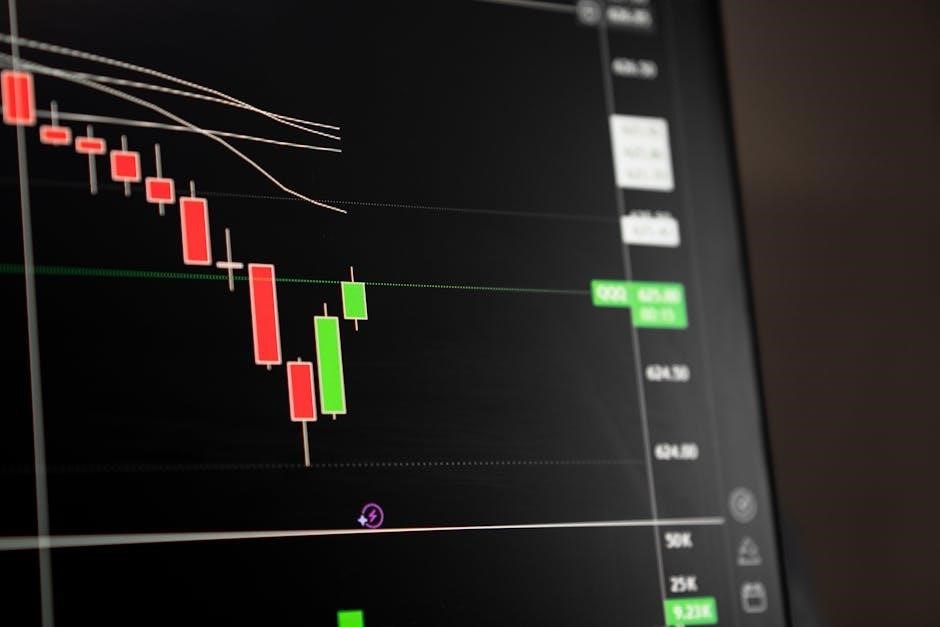
Advanced MTF Techniques
Shannon’s techniques involve adjusting anchor timeframes to weekly or monthly views for broader trend analysis, combined with market structure analysis across different scales․
Adjusting Anchor Timeframes (Weekly/Monthly)
Expanding the scope of analysis beyond daily and hourly charts is crucial for a comprehensive understanding of market trends․ Technical Analysis Using Multiple Timeframes emphasizes adjusting anchor timeframes to weekly or monthly levels․ This broader perspective allows traders to identify the prevailing long-term trend, providing essential context for interpreting price action on shorter timeframes․
By anchoring analysis to higher timeframes, traders can filter out noise and focus on significant shifts in market sentiment․ This technique helps confirm the direction of the primary trend and identify potential areas of support and resistance that may not be apparent on lower timeframes․ It’s about building a hierarchical understanding, where shorter-term movements are viewed within the framework of the larger, dominant trend․
Market Structure Analysis Across Timeframes
Analyzing market structure consistently across multiple timeframes is a cornerstone of effective multi-timeframe technical analysis, as highlighted in Technical Analysis Using Multiple Timeframes․ This involves identifying trends, trading ranges, and key structural elements – like peaks and troughs – on various chart scales․
Confirming consistent structure across timeframes strengthens the validity of trading signals․ For example, an uptrend identified on a daily chart should ideally be corroborated by similar upward momentum on hourly charts․ Discrepancies can signal potential reversals or consolidations․ This layered approach provides a robust framework for understanding market dynamics and making informed trading decisions․
Combining MTF with Price Action Patterns
Integrating multi-timeframe (MTF) analysis with price action patterns, a core tenet of Brian Shannon’s approach, significantly enhances trading precision․ Identifying patterns like head and shoulders or flags on a lower timeframe, while confirming the overall trend direction on a higher timeframe, increases probability․
For instance, a bullish engulfing pattern on an hourly chart is more compelling if it occurs within a broader daily uptrend․ MTF analysis provides crucial context, filtering out false signals and validating potential trading opportunities․ This synergy between pattern recognition and contextual analysis, detailed in resources like Technical Analysis Using Multiple Timeframes, is vital for consistent success․

Resources and Further Learning
Brian Shannon’s Technical Analysis Using Multiple Timeframes is a foundational text, alongside resources from The Logical Trader and WB 1778’s MTF analysis PDF․
Brian Shannon’s “Technical Analysis Using Multiple Timeframes”
Brian Shannon’s 2008 book, Technical Analysis Using Multiple Timeframes, is a cornerstone for traders seeking a deeper understanding of market structure and trend alignment․
Spanning 184 pages, the book emphasizes contextual analysis, layering information from different timeframes to improve trading decisions․ It has received a high rating of 5․0 from 3 reviewers․
The work reinforces the value of analyzing price charts across various timeframes, identifying key support and resistance levels, and ultimately, capitalizing on optimal trading opportunities․ Many traders and educators have been influenced by Shannon’s approach․
PDF versions are available, making this valuable resource accessible to a wider audience․ It provides concrete examples for strategy development and application․
The Logical Trader Resources
The Logical Trader offers valuable resources related to multi-timeframe analysis, including a PDF document spanning 135 pages․ This resource complements Brian Shannon’s work, providing further insights into contextual market analysis․
The Logical Trader’s materials focus on enhancing understanding of market structure and improving trading strategies․ They delve into techniques for identifying trends and optimizing entry points across different timeframes․
With 89 reviews (and a rating of 19), these resources are well-regarded within the trading community․ They provide practical guidance for implementing a top-down trading approach, utilizing both technical indicators and price action patterns․
These PDFs are designed to help traders gain a clearer picture of market dynamics․
WB 1778 Multiple Timeframe Analysis
WB 1778’s PDF on Multiple Timeframe Analysis provides a focused exploration of this crucial trading technique, consisting of 83 pages (with 6 reviews)․ It’s designed to enhance a trader’s ability to interpret market signals across varying time scales․
This resource delves into practical applications, offering guidance on aligning trends and identifying optimal trading opportunities․ It complements Brian Shannon’s foundational work, offering a different perspective on contextual analysis․
The document, totaling 57 pages in some versions, emphasizes a top-down approach, encouraging traders to analyze daily, hourly, and lower timeframes for confirmation․
It’s a valuable tool for refining trading strategies and improving market understanding․
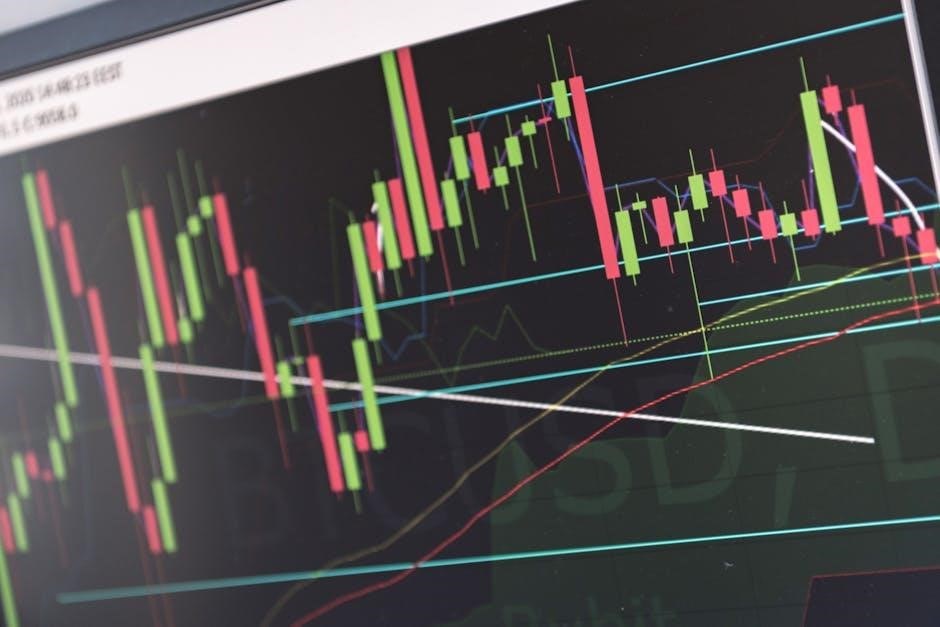
Mastering the Art of MTF Analysis
Multi-Timeframe (MTF) analysis, as detailed in resources like Brian Shannon’s book and WB 1778’s PDF, isn’t merely a technique, but a holistic approach to market interpretation․
Successfully applying MTF requires consistent practice and a dedication to understanding how different timeframes interact․ It’s about building a contextual awareness that transcends simple chart patterns․
Resources like The Logical Trader further reinforce the value of layered analysis, providing additional insights and strategies․
Mastering MTF empowers traders to identify higher-probability setups and navigate market complexities with greater confidence․